01
Ready for the elements
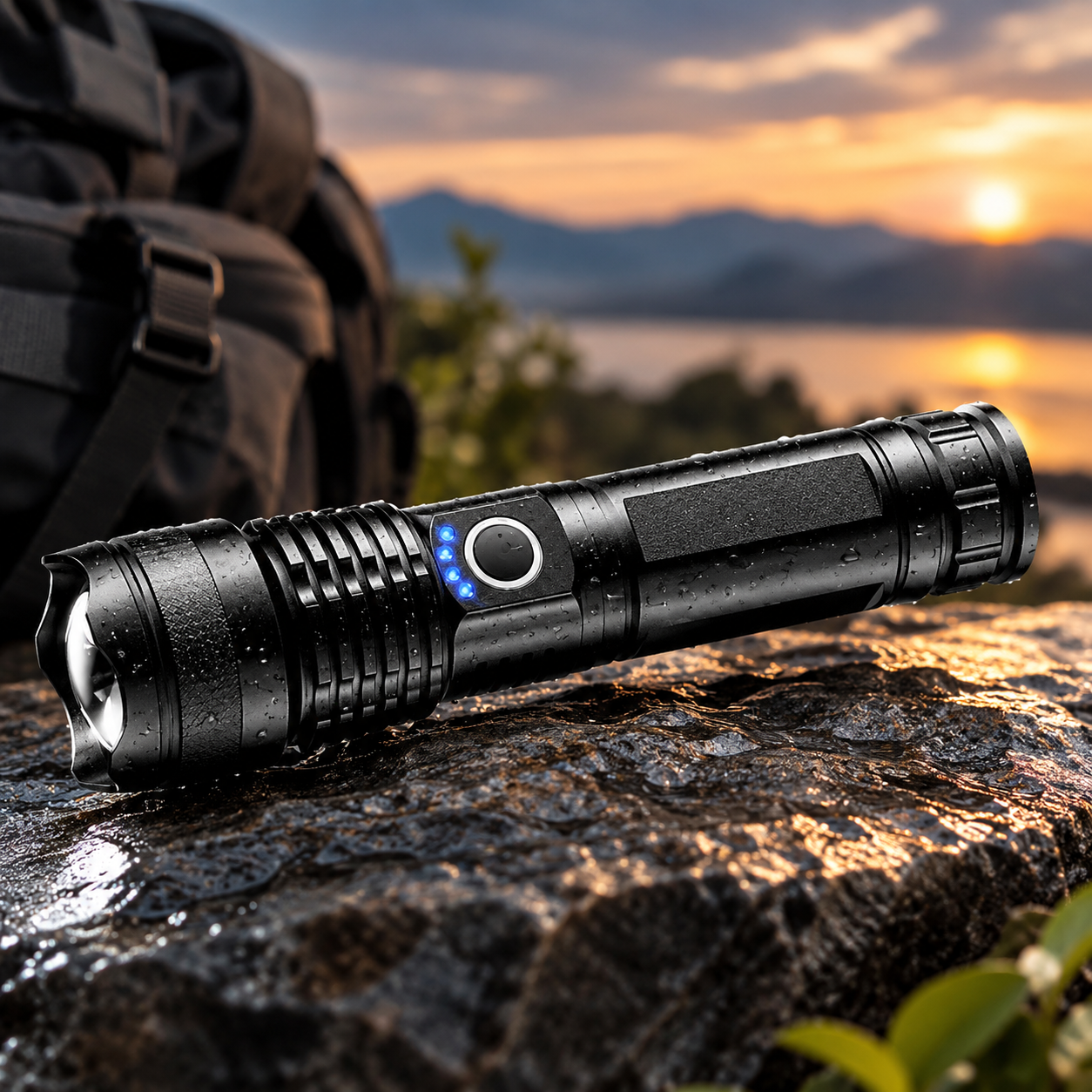
A weather-ready mindset for changing conditions. Confirm documented water-resistance limits before exposure.
Engineered to keep you safe.
Anywhere.
When the light fades, your confidence shouldn’t. Meet the flashlight made for everyday preparedness, outdoor adventures, and the unexpected moments in between.
Thoughtful details. Purposeful construction.
A practical companion when visibility matters.
A weather-ready mindset for changing conditions. Confirm documented water-resistance limits before exposure.
An updated XHP50 LED chip identified in the product reference. Light the way with clarity and control.
Aviation-grade aluminum, as labeled in the supplied diagram, with a distinctive protective head design.
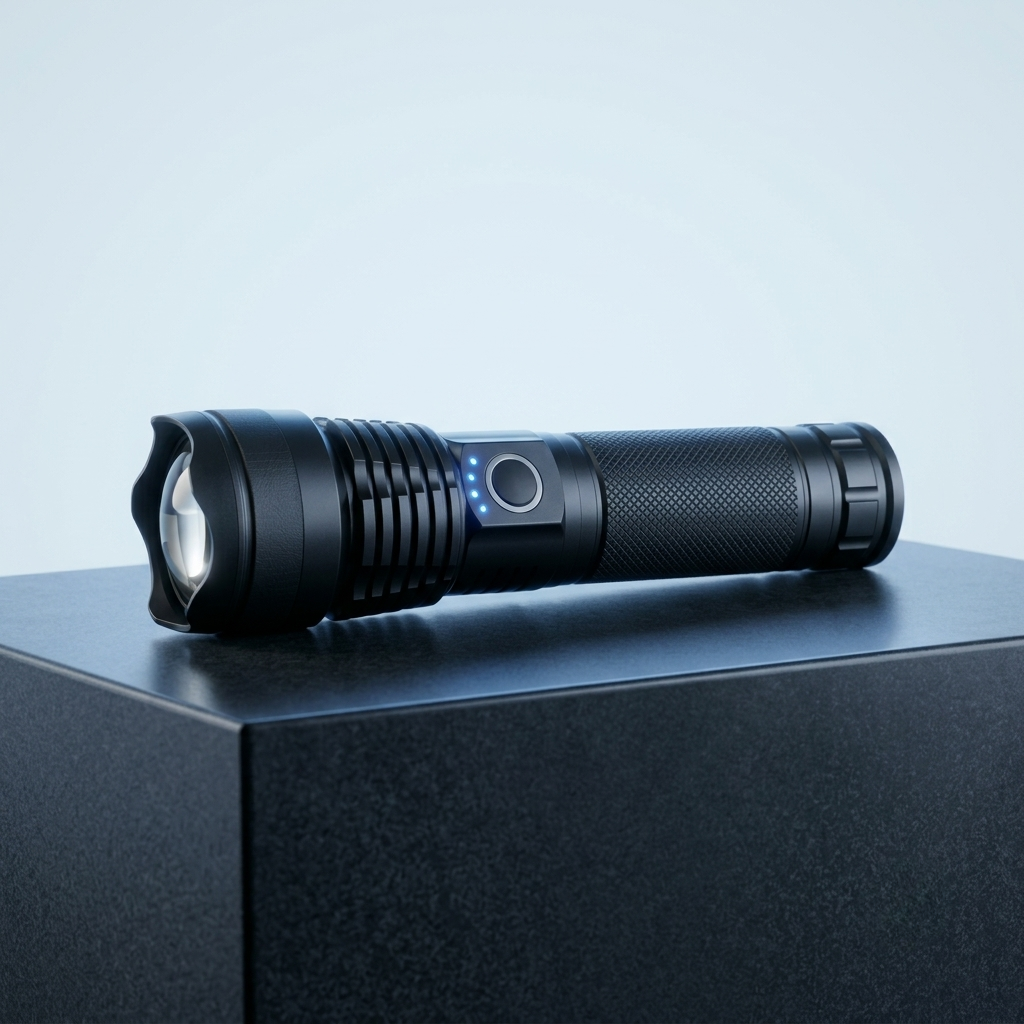
A textured body, accessible side switch, and visible blue power display keep the essentials close at hand.
 02 / PRECISION IN EVERY DETAIL
A solid feel. An intuitive control. A grip that gives your hand a place to settle. Every visible detail serves a simple purpose: make your light easier to carry, find, and use.
Blue indicators sit beside the switch, keeping the power display right where you need it.
The textured housing offers a defined grip area for everyday carrying and practical handling.
From an evening walk to your home preparedness kit, keep a dedicated light within reach.
The supplied component reference gives you
a closer look at the details behind the design.
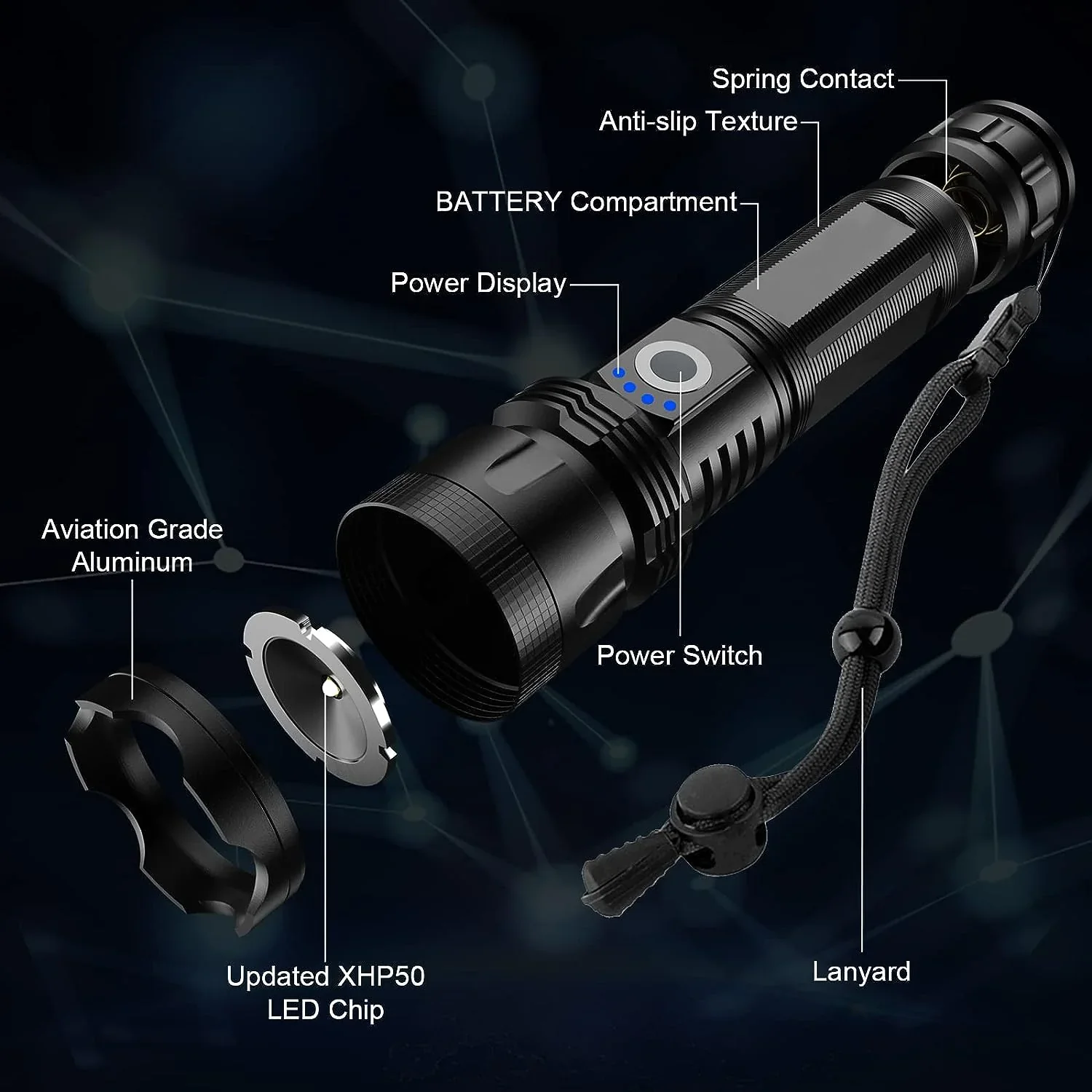
The component view identifies the updated XHP50 LED chip, aluminum construction, power switch, display, battery compartment, and spring contact.
The lanyard shown offers an additional carrying option. Confirm package contents and the exact version with the seller before ordering.
Know the limits. Verified brightness, runtime, battery specifications, and an IP rating are not included in the supplied reference.
Bring a dedicated light on evening walks, camping trips, and outdoor excursions. Check your route, weather, and battery before heading out.
Keep a flashlight in a familiar, accessible place for power interruptions, garage projects, and the everyday search for something just out of sight.
Give your light a designated place in your travel kit. Follow battery storage guidance and make a quick equipment check part of every departure.
A flashlight supports visibility and awareness. It is not a guarantee of safety. Prioritize distance, good judgment, and appropriate assistance when a situation feels unsafe.
Get to know your equipment, build better habits,
and make your next step a more informed one.
Darkness changes familiar places. A path you know by daylight can conceal loose stones, uneven ground, or a low branch after sunset. A hallway can become difficult to navigate during an unexpected outage. A practical flashlight gives you a way to pause, illuminate what is ahead, and make a more informed decision. The Waterproof Defense Flashlight brings that everyday purpose into a substantial handheld design. Its visible features include a textured body, a prominent side switch, blue power indicators, and a protective front profile. These are tangible details you can examine in the supplied product photographs, rather than abstract promises. Think of it as one part of a thoughtful preparedness routine: easy to locate, comfortable to carry, and ready to help you see your surroundings. A light does not replace judgment, but it can give judgment a clearer starting point.
The most useful equipment is often the equipment you remember to bring. Before a evening walk, a camping trip, or a drive away from well-lit roads, choose a consistent place for your flashlight. A dedicated pocket in your bag or a familiar compartment in your vehicle can make retrieval simpler when conditions change. The photographed design has a substantial cylindrical body and a side-mounted control that is visually distinct from the surrounding metal. Get familiar with that arrangement before you need it in darkness. Practice finding the switch without looking, holding the light steadily, and setting it down securely. That small investment in familiarity is more valuable than relying on an unverified performance number. Preparedness is not about anticipating every possible situation. It is about removing a few avoidable uncertainties from the situations you are most likely to encounter.
The supplied component image identifies aviation-grade aluminum as a construction feature. The dark metal finish, protective head, and defined body geometry give this flashlight its unmistakably utilitarian character. Aluminum is commonly chosen for handheld equipment because it can offer a useful balance between structural strength and manageable weight. The exact alloy, finished weight, and tested impact resistance are not specified in the supplied reference, so those details should be confirmed with the seller if they are important to your purchase. What the photographs clearly show is a housing designed around grip, control, and a prominent lighting head. Treat that housing with the same care you would give any practical tool. Avoid unnecessary drops, check for visible damage after rough use, and keep contact surfaces clean. Good maintenance supports dependable use without depending on exaggerated durability claims.
A flashlight should feel secure when your attention is on the path rather than the product. The reference images show a textured grip area along the body, with surface patterns that vary between the supplied views. This texture is a visible part of the design and gives your hand a defined place to settle. Grip can still change with water, gloves, mud, or individual hand size, so it is worth trying your preferred hold in a safe setting. Keep your fingers away from the front opening and avoid covering the light while it is operating. If your unit includes the lanyard shown in the component image, inspect its attachment before relying on it. A wrist strap is a carrying aid, not a climbing attachment or a substitute for a secure hold. Practical handling begins with knowing your equipment and noticing how it feels in the conditions around you.
The annotated product image identifies an updated XHP50 LED chip. That label gives you a useful reference when discussing the product with the seller, but it does not establish a verified brightness measurement, beam distance, or runtime on its own. Those outcomes depend on the complete light, its power supply, operating mode, and test conditions. When you receive your flashlight, examine the beam in a familiar space and learn how it illuminates nearby surfaces and more distant objects. Keep the beam pointed away from eyes, moving traffic, and reflective surfaces that might cause glare. For walking, angle the light toward the ground ahead so you can see changes in footing without constantly dazzling other people. For inspecting a bag or a compartment, use the least intense suitable setting if your unit provides adjustable modes. Responsible illumination is as much about direction as output.
The blue indicator lights beside the side switch are identified as the power display in the supplied diagram. Their position puts the display near the control you use to operate the flashlight, making it an easy detail to check during your preparation routine. Do not assume that a particular number of illuminated dots corresponds to a precise percentage unless the product instructions explain that relationship. Indicator behavior can differ between units and battery conditions. Before an extended outing, review the actual instructions supplied with your flashlight, confirm the approved battery type, and follow the recommended charging or replacement procedure. Keep battery contacts clean and avoid mixing incompatible cells. If a battery is damaged, swollen, leaking, or unusually hot, stop using it and follow appropriate disposal guidance. A simple power check before leaving home can help prevent discovering a depleted light when you are already away from convenient alternatives.
The product is presented as a Waterproof Defense Flashlight, and the outdoor reference photograph shows water droplets on its housing. That presentation supports the weather-ready visual direction of this page, but the supplied materials do not state an independently verified ingress-protection rating, immersion depth, or permitted exposure time. Before using the light in heavy rain, near open water, or in conditions where it might be submerged, ask the seller for the applicable water-resistance specification. Make sure any caps and seals are correctly seated according to the instructions. After exposure, dry the exterior and check the unit before opening the battery compartment. Never treat a wet product photograph as proof that charging a wet device is safe. Respecting documented limits is the best way to keep weather preparedness practical rather than speculative. When conditions become unsafe, seek shelter instead of relying on equipment alone.
Outdoor use is only one part of a flashlight’s role. At home, a dedicated light can help you locate essential supplies during a power interruption without draining your phone. In a garage, it can make it easier to inspect a shelf, find a dropped item, or look into a shadowed corner. On a trip, it can help you identify your belongings and move around unfamiliar accommodation without turning on every overhead light. Keep the flashlight accessible, but store it where children cannot accidentally shine it into their eyes. If you keep one in a vehicle, follow the battery manufacturer’s storage guidance, particularly in hot or freezing conditions. Revisit its location occasionally as your routines change. A tool that is stored thoughtfully is more likely to become part of everyday life rather than something forgotten at the bottom of a crowded bag.
The word defense should be understood in the context of practical awareness and responsible preparation. A flashlight can help you recognize an obstacle, identify a safer route, or locate an exit in a poorly lit area. It does not guarantee personal safety, and this page does not recommend using it to confront another person. If a situation feels unsafe, prioritize creating distance, moving toward a populated or well-lit location, and contacting appropriate assistance. Avoid pointing a bright beam at other people’s faces except where necessary to address an immediate safety need. Familiarize yourself with local rules and the guidance relevant to your activities. Confidence is most useful when paired with restraint and situational awareness. Carrying a light is a straightforward way to improve visibility; it should complement a broader plan that includes communication, route knowledge, and an understanding of when to leave an area.
A flashlight works best as part of a kit that reflects your circumstances. For an evening walk, that might mean your phone, appropriate footwear, and a light you have checked before departure. For a household outage, it might include accessible lighting, drinking water, essential medication, and a way to receive local guidance. For camping, add navigation tools and clothing suited to the expected weather. The right combination depends on where you are going and who is with you. There is no need to make the routine complicated. Pick a storage location, check the flashlight periodically, and let other household members know where it is. Keep instructions with equipment that requires a specific battery or charging method. If you prepare a shared kit, make sure everyone understands how to use its contents. Familiarity and consistency often matter more than having a long list of equipment.
After use, take a moment to check the housing, lens area, switch, and any attached strap. Remove loose dirt with a soft cloth and use only cleaning methods approved by the manufacturer. Avoid harsh solvents or abrasive tools that could damage finishes, seals, or optical surfaces. If the flashlight has been exposed to moisture, let it dry according to the instructions before charging or opening compartments. Store it away from excessive heat and keep the battery arrangement consistent with the manufacturer’s recommendations. If performance changes unexpectedly, consult the supplied manual rather than repeatedly forcing a switch or overtightening a cap. The exploded reference view illustrates a battery compartment and spring contact, but it is not a repair guide. Do not disassemble internal components simply to match the photograph. Thoughtful care protects the features you actually use and helps you notice issues before your next outing.
A good purchase begins with a clear understanding of what is shown and what still needs confirmation. The three supplied product images present the flashlight from a studio angle, in an outdoor setting, and as an annotated component view. They highlight the side control, power display, textured housing, LED component, and lanyard. Some visible details differ between the photographs, so confirm the exact configuration you will receive with the seller. Ask about included accessories, battery requirements, charging instructions, dimensions, documented weather resistance, and available operating modes if those details affect your decision. This page intentionally avoids inventing prices, ratings, or performance measurements. When you are ready, the order buttons take you directly to http://defenseflashlight.com, the purchase destination provided for this product. Review the current listing and its terms there before completing your order. Informed preparation starts with informed choices.
The details that help you choose responsibly.
Check the seller’s listing for current specifications.
The supplied images identify an updated XHP50 LED chip, aviation-grade aluminum, an anti-slip texture, a side power switch, a blue power display, a battery compartment, a spring contact, and a lanyard. Confirm the exact configuration and included accessories on the seller’s current listing, as the photographed body details vary between views.
The product is described as waterproof, but no IP rating, tested depth, or immersion duration was supplied. Check the seller’s documented water-resistance limits before wet-weather use. Do not submerge the flashlight or charge it while wet without explicit manufacturer guidance.
Verified lumen output, beam distance, operating modes, and runtime were not provided. The reference identifies an XHP50 LED component, but that label alone does not establish complete product performance. Review the specifications at the order destination before purchasing.
The image shows a battery compartment and spring contact, but the supplied material does not specify battery type, charging method, or package contents. Check the seller’s listing for the approved power supply and included accessories before placing your order.
Every Order Flashlight button on this page links to http://defenseflashlight.com. That is the supplied purchase destination. Product availability, checkout, delivery information, and current purchase terms are handled by that site.
Power, Protection, and Precision—Engineered to Keep You Safe Anywhere.
Order Flashlight Order online at http://defenseflashlight.com